
Sourcing
Top PVC Cling Film Manufacturers in China 2026: Factory Guide
Top PVC Cling Film Manufacturers in China 2026: Factory Guide
China produces more PVC cling film than any other country — roughly 700,000 tonnes of PVC-based food and industrial cling film annually, accounting for over 40% of global output. For a B2B importer, that means the right factory exists somewhere in China. The challenge is finding it among thousands of Alibaba listings, distinguishing real manufacturers from traders, and evaluating factory capability before you commit a container deposit.
This guide is the factory-level companion to our Top 10 manufacturer profiles. Where that article names specific companies, this one gives you the framework: where the factories are, what good ones look like, how to audit them, and the step-by-step procurement workflow that experienced importers use.
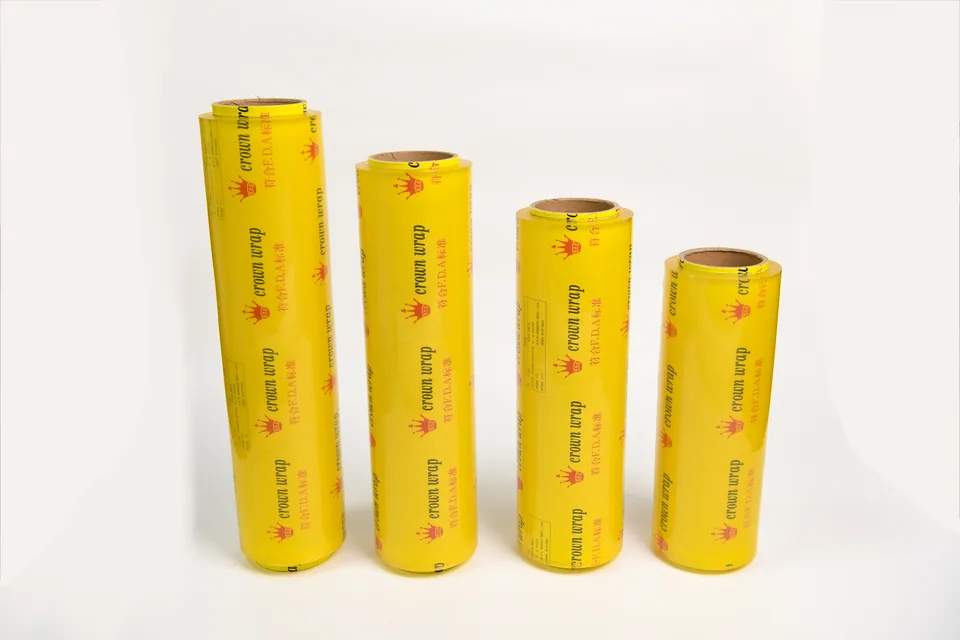
The Chinese PVC cling film manufacturing landscape in 2026
Industry size and structure
China’s cling film industry produced approximately 1.06 million tonnes in 2023, with PVC accounting for 60-70% of that volume. Domestic consumption absorbed roughly 920,000 tonnes; the remainder was exported, primarily to Southeast Asia, the Middle East, Africa and Latin America.
The industry is structured in three tiers that buyers must understand:
Tier 1 — International brands with China operations. Berry Global, Kloeckner Pentaplast, Reynolds, Mitsubishi Chemical. These serve multinational QSR chains and major retail accounts through contract manufacturing. Prices reflect the brand premium, and MOQs are typically large. Relevant only if you are sourcing for a global food-service brand.
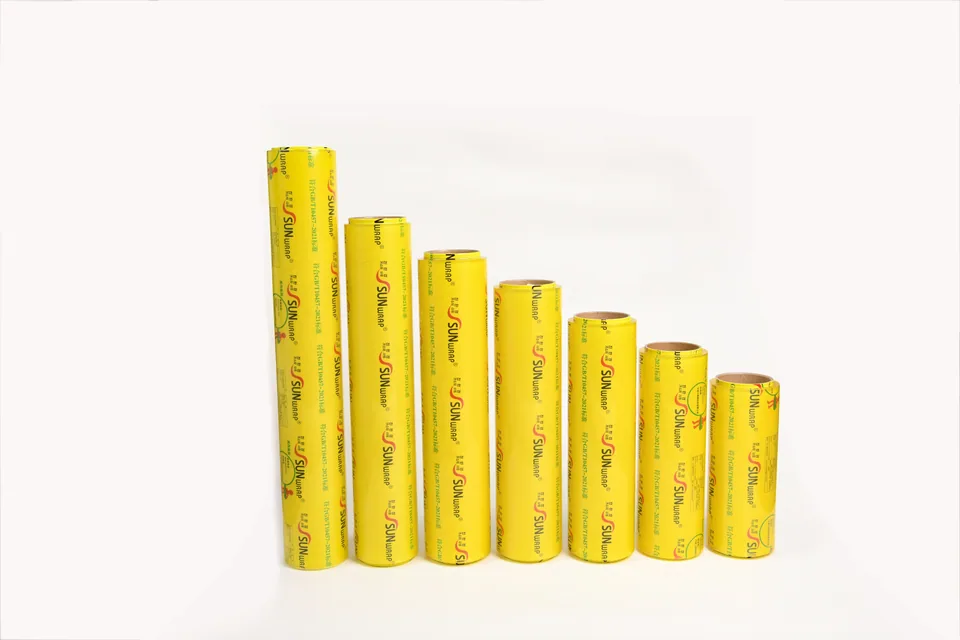
Tier 2 — Chinese branded manufacturers. This is where most B2B importers should focus. These are resin-to-roll factories with their own extrusion lines, established brand names, export documentation, and food-safety certifications. Monthly capacity ranges from 300 to 1,500+ tonnes. Examples include SUNWRAP (Ningbo Sanrong New Materials), Miaojie, and a handful of other branded producers in Zhejiang and Jiangsu. Price is moderate — 5-10% above Tier 3 — but consistency, compliance, and reliability are dramatically better.
Tier 3 — Small OEM factories, converters and traders. Several thousand listings on Alibaba and 1688. Some are legitimate small-scale extruders; many are trading companies or converters who buy jumbo rolls from Tier 2 factories and slit/repackage them. Prices are the lowest, but quality variance is high, food-safety documentation is often incomplete, and batch-to-batch consistency is poor.
Why tier matters for your business
The tier you source from determines your risk profile:
| Dimension | Tier 2 branded factory | Tier 3 OEM / trader |
|---|---|---|
| Thickness consistency | +/- 0.5 micron | +/- 1.5-2.0 micron |
| Migration test reports | Current, on file | Often expired or generic |
| Retained production samples | 6-12 months per batch | Rarely available |
| Container rejection rate | Less than 1% | 5-15% |
| Average lead time | 18-22 days | 12-18 days |
| Price level | Baseline | 5-10% lower |
The 5-10% price saving from a Tier 3 supplier is eliminated by a single quality claim, customs hold, or line downtime event.
Where the factories are: China’s PVC cling film production clusters
Zhejiang Province — the export hub
Key cities: Ningbo, Cixi, Hangzhou, Taizhou
Zhejiang is the centre of gravity for food-grade PVC cling film for export. The concentration here is driven by three factors:
-
Port proximity. Ningbo-Zhoushan Port is the world’s number-one port by cargo tonnage, with daily sailings to Southeast Asia (7-12 days), the Middle East (18-25 days), and Africa (20-45 days). A factory 40 km from the port — like SUNWRAP’s facility in the Ningbo Qianwan New Area — can truck a loaded container to the port terminal in under two hours.
-
Mature plastics supply chain. PVC resin suppliers, food-grade plasticiser producers, and packaging converters are all within a 100 km radius. This reduces raw material lead times and logistics costs.
-
Export infrastructure. Customs brokers, freight forwarders, testing laboratories (SGS Ningbo, Intertek Hangzhou, Bureau Veritas Zhejiang) and trade finance are all established here.
Factory profile: Mid-to-large scale branded manufacturers. Food-grade focus. Strong export documentation. Higher price than inland alternatives, offset by lower logistics costs and faster port access.
Jiangsu Province — industrial strength
Key cities: Suzhou, Wuxi, Changzhou, Nanjing
Jiangsu’s PVC film sector is historically stronger in industrial and construction-grade PVC film, but several food-grade cling film producers operate here as well. Access to Shanghai Port provides an alternative export route.
Factory profile: Mix of industrial and food-grade producers. Technically sophisticated — many of the casting-line manufacturers and polymer compounders that supply the entire Chinese PVC film industry are based here.
Guangdong Province — the converter hub
Key cities: Foshan, Dongguan, Shenzhen, Guangzhou
Guangdong has a large number of PVC film converters and private-label finishers, but fewer resin-to-roll extruders. Most Guangdong “manufacturers” buy jumbo rolls from Zhejiang or Jiangsu factories and slit, cut, and package them into finished retail SKUs with custom branding.
Factory profile: Converters and private-label finishers. Good for finished retail packs with colour-box packaging. If you are sourcing finished consumer-pack cling film with custom printing, Guangdong converters can deliver competitive pricing. For food-contact compliance, always ask who extruded the base film and request their test reports — not the converter’s.
Shandong Province — volume play
Key cities: Qingdao, Weifang, Linyi
Shandong produces large volumes of commodity-grade PVC film at competitive prices. Food-grade compliance is more variable here — some factories maintain proper certifications, many do not. Qingdao Port provides access to Northeast Asian and Pacific routes.
Factory profile: High volume, lower cost. Best for non-food industrial use. For food-grade sourcing, apply extra due diligence on certifications and run independent third-party testing on initial shipments.
Secondary clusters
Hebei, Henan and Hubei have smaller PVC film factories that primarily serve the domestic market. Export capability and English-language communication are limited in these regions. Unless you have a sourcing agent on the ground, the east-coast clusters are more practical for international buyers.
Factory audit criteria: what to check before you order
Whether you visit in person or conduct a remote audit (video call plus documentation review), evaluate every potential PVC cling film manufacturer against these seven criteria.
1. Extrusion equipment
Ask for the equipment list with brand names, model numbers, and year of installation. Key questions:
- How many casting lines? Each line typically produces 3-8 tonnes per day depending on width and thickness.
- What width capacity? Standard cling film lines run 300-600 mm; wide-web lines run up to 1,500 mm for jumbo rolls.
- Are lines dedicated to food-grade production? A factory that runs industrial PVC and food-grade PVC on the same line must do thorough changeover cleaning — ask about their changeover protocol.
2. Raw material sourcing
Food-grade PVC cling film requires food-grade PVC resin and food-grade plasticisers. Ask:
- Which PVC resin brand and grade? Reputable grades include Formosa, Xinjiang Zhongtai, and Inner Mongolia Yihua.
- Which plasticiser? Modern food-grade formulations use non-phthalate plasticisers: DOTP, ATBC (acetyl tributyl citrate), or ESBO (epoxidised soybean oil). If the factory uses DEHP or other restricted phthalates, walk away.
- Do they maintain incoming QC records for raw materials? A factory that does not test incoming resin cannot guarantee outgoing film quality.
3. Quality control process
The minimum QC infrastructure for a credible PVC cling film factory:
- Inline thickness gauge (non-contact, continuous measurement during extrusion)
- Tensile and elongation tester (ASTM D882 or equivalent)
- Cling-strength tester (ASTM D5458 or equivalent)
- Migration testing capability (in-house or contracted to SGS/Intertek on a routine schedule)
- Retained sample library (samples from every export lot held for 6-12 months)
If the factory cannot show you their QC lab — in person or by video — that is a significant red flag.
4. Certifications and compliance
The baseline documentation package for food-grade PVC cling film:
| Certification | Scope | Verification method |
|---|---|---|
| FDA 21 CFR 177.1950 | PVC food-contact compliance (US) | Request original PDF, verify report number with lab |
| SGS migration report | Heavy metals, plasticiser migration | Must be dated within 12 months, specific to formulation |
| EU 10/2011 DoC | EU food-contact materials regulation | Required for EU-bound shipments |
| ISO 9001 | Quality management system | Check certificate validity on IAF CertSearch |
| ISO 22000 / HACCP | Food safety management | Check certificate validity |
For a detailed certification-vetting walkthrough, see our food-grade cling film certification guide.
5. Production capacity and utilisation
Capacity tells you whether the factory can serve your volume:
- Monthly output (tonnes): A mid-sized factory runs 300-800 tonnes/month. This supports 2-4 container orders per month from a single buyer while still serving other customers.
- Current utilisation rate: A factory at 95% utilisation has no slack for your urgent repeat orders. Ask what percentage of capacity is committed to existing contracts.
- Seasonal patterns: Cling film demand peaks in Q2-Q3 in many markets (warm weather drives fresh-food consumption). Factories in these periods may extend lead times by 5-7 days.
6. Export experience
A factory that has exported to 30 countries over 15 years manages documentation, container loading, and customs requirements differently from one that has done three export orders. Ask:
- How many countries do you export to? A credible export factory ships to 15+ countries.
- How many containers per month? Regular exporters load 20-50+ containers monthly.
- Which ports do you use? Proximity to Ningbo-Zhoushan or Shanghai is optimal. Factories shipping from Qingdao, Shenzhen, or Guangzhou may have longer truck times and fewer sailing options for certain routes.
- Can you provide references from existing buyers in my market? A confident factory will offer this.
7. OEM and private-label capability
If you plan to sell cling film under your own brand, evaluate:
- Printing capability: Flexographic printing on film (up to 4 colours), offset or digital printing on dispenser boxes
- Artwork support: Can they work from your design files, or do they have in-house design staff?
- Minimum print run: Typically 5,000-10,000 cartons for custom printing
- Plate costs: USD 200-500 per colour for flexo plates; amortised over subsequent orders
- Sample lead time: 7-14 days for pre-production samples with custom printing
For a complete OEM setup walkthrough, see our private label cling film guide.
Pricing benchmarks: what good factories charge in 2026
FOB Ningbo pricing for food-grade PVC cling film in August 2026:
| Product format | Thickness | Price range (USD/tonne, FOB) |
|---|---|---|
| Jumbo roll (raw, uncut) | 8-12 micron | $1,350-1,750 |
| HORECA roll (30 cm x 300 m) | 10 micron | $1,700-2,200 |
| HORECA roll (45 cm x 300 m) | 10 micron | $1,800-2,300 |
| Retail consumer pack (30 cm x 30 m) | 10 micron | $2,200-3,000 |
| Custom OEM/private label | Varies | Add $100-300/tonne for printing + packaging |
Price drivers:
- Thickness: Thinner film (8 micron) uses less resin per square metre. Each micron up adds approximately $80-120 per tonne.
- Width: Standard widths (30, 45 cm) are cheaper than non-standard widths that require changeover.
- Volume: 5+ containers per quarter typically unlocks 3-5% volume discount.
- Plasticiser grade: Premium non-phthalate plasticisers (ATBC, polymeric) add $50-100 per tonne versus standard DOTP.
Prices below these ranges usually indicate lower-grade resin, recycled PVC content, or non-food-grade plasticiser — all of which create compliance risk.
Step-by-step procurement workflow
This is the workflow experienced importers use when sourcing from a new Chinese PVC cling film factory:
Step 1: Shortlist (Week 1-2)
- Search Alibaba, Global Sources, and Made-in-China for “PVC cling film manufacturer” — filter by Gold Supplier, Verified, and Trade Assurance
- Request business licence and factory photos from 5-8 candidates
- Eliminate obvious traders using the verification steps described above
- Narrow to 3-4 genuine factories for detailed evaluation
Step 2: Sample and documentation request (Week 2-3)
- Request free samples (most factories send 2-3 sample rolls at no charge, courier cost on buyer)
- Request the full certification package: FDA report, SGS migration test, ISO certificates
- Send samples to your own lab or a local testing lab if your market requires specific compliance standards
Step 3: Factory audit (Week 3-5)
- Conduct a video factory tour (minimum) or an in-person visit (preferred for orders above USD 50,000/year)
- Walk the checklist above: equipment, raw materials, QC lab, certifications, capacity, export references
- If you cannot visit, hire a third-party inspection company (SGS, Bureau Veritas, or a China-based independent inspector) to audit the factory on your behalf — cost is typically USD 300-600 per day
Step 4: Trial order (Week 5-8)
- Place a trial order: one 20-foot container or, if the factory accepts, a half-container trial (3-5 tonnes)
- Specify all parameters in writing: resin type, plasticiser type, thickness, width, roll length, packaging, labelling, and palletisation
- Pre-shipment inspection: hire a third-party inspector to check dimensions, weight, packaging, and pull random samples for thickness testing before the container is sealed — cost is USD 200-350 per inspection
Step 5: Evaluate and scale (Week 8-12)
- Receive the trial container and run incoming QC: thickness measurement (at least 10 samples per pallet), cling test, visual clarity check
- Compare against sample rolls sent earlier — consistency between sample and bulk is the most important quality indicator
- If satisfied, negotiate annual volume pricing and place the first production order (typically 2-4 containers)
Red flags: when to walk away from a factory
After evaluating hundreds of Chinese PVC cling film manufacturers over two decades of export trading, these are the warning signs that reliably predict problems:
-
Cannot produce a factory video within 48 hours. A real factory with nothing to hide can film a 60-second clip of the line running. A trader needs to arrange access — which takes days.
-
Migration test report is older than 12 months. Formulations change; raw material batches change. A current report means the factory tests routinely. An old report means they tested once to win a specific order and stopped.
-
Price is more than 15% below market range. PVC resin costs what it costs. A factory that significantly undercuts the market is cutting corners somewhere — recycled resin, sub-standard plasticiser, thinner film than specified, or incomplete QC.
-
No retained samples. If a quality complaint arises three months after delivery and the factory cannot pull the retained batch sample for re-testing, dispute resolution becomes impossible.
-
Resistant to third-party inspection. A factory that refuses pre-shipment inspection or discourages buyer-nominated inspectors is telling you something. Listen.
-
Business licence address does not match factory location. This is the single fastest trader-detection test. Five minutes on Baidu Maps resolves it.
Why factory location matters for your landed cost
The factory’s distance from port directly impacts your total landed cost:
| Factory location | Distance to nearest major port | Inland trucking cost (20GP) | Typical transit time to Dubai |
|---|---|---|---|
| Cixi / Ningbo (Zhejiang) | 40-80 km to Ningbo-Zhoushan | $150-250 | 18-22 days |
| Suzhou / Wuxi (Jiangsu) | 120-180 km to Shanghai | $300-450 | 20-25 days |
| Foshan / Dongguan (Guangdong) | 50-100 km to Shenzhen/Nansha | $200-350 | 15-20 days |
| Qingdao (Shandong) | 30-60 km to Qingdao Port | $150-250 | 22-28 days |
| Linyi / Weifang (Shandong) | 200-350 km to Qingdao | $400-600 | 24-30 days |
For a buyer importing 10 containers per year, the inland trucking differential between a port-adjacent factory and an inland factory adds up to USD 2,000-4,000 annually — often more than the quoted price difference.
Conclusion
China’s PVC cling film manufacturing sector is deep enough to supply virtually any volume, specification and price point a B2B importer needs. The challenge is not finding a factory — it is finding the right factory and establishing a relationship that delivers consistent quality, reliable lead times, and complete food-safety documentation over multiple years of ordering.
Start with the tier structure (focus on Tier 2 branded manufacturers unless you have in-house QA), apply the seven-point audit checklist, run a trial container before committing volume, and choose a factory close to a major export port.
SUNWRAP (Ningbo Sanrong New Materials Co., Ltd.) has produced food-grade PVC cling film for over 20 years under Korean investment, operating from our facility in the Ningbo Qianwan New Area — 40 km from Ningbo-Zhoushan Port. We serve importers across Southeast Asia, the Middle East, Egypt, Africa and Latin America with FDA-compliant, SGS-tested cling film in jumbo roll, HORECA, and retail formats. We also produce PE cling film, food-grade cling film, and custom OEM cling film.
If you are evaluating Chinese PVC cling film manufacturers, contact our export team — we respond within one business day with pricing, samples, and the full certification package.
Frequently asked questions
How do I find a genuine manufacturer instead of a trader? Request a dated factory video, cross-check the business licence address on Baidu Maps, and ask for the equipment list with brand names. Roughly 70% of Alibaba cling film listings are traders or converters.
What certifications should a factory have? Minimum: FDA 21 CFR 177.1950, SGS migration report (within 12 months), ISO 9001, and ISO 22000/HACCP. Add EU 10/2011 DoC for European markets.
What production capacity should I look for? For importers ordering 2-4 containers per quarter, a factory producing 300+ tonnes per month provides the best balance of capacity, consistency, and flexibility.
Which Chinese cities have the most cling film factories? Zhejiang (Ningbo, Cixi) dominates food-grade export. Jiangsu (Suzhou, Wuxi) is strong in industrial grade. Guangdong (Foshan, Dongguan) is primarily converters.
What is the average lead time? 15-25 days production after deposit, plus inland transport. Custom OEM orders add 7-10 days. Total CIF delivery is 4-10 weeks depending on destination.
Looking for a reliable PVC cling film manufacturer in China? SUNWRAP is a Korean-invested factory in Ningbo — FDA-compliant, SGS-tested, 20+ years of production. Request a quote ->
Frequently Asked Questions
How do I find a genuine PVC cling film manufacturer in China instead of a trader?+
Three verification steps work reliably: (1) Request a dated factory video showing the extrusion line running with jumbo rolls coming off the winder — traders cannot produce this on demand. (2) Cross-check the business licence address against the factory location on Baidu Maps satellite view. If the address is a commercial office tower, it is a trading company. (3) Ask for the equipment list with brand names (e.g. specific casting-line manufacturers). A real factory names their equipment; a trader gives generic answers. Our experience is that roughly 70% of Alibaba cling film listings are traders or converters, not resin-to-roll manufacturers.
What certifications should a Chinese PVC cling film factory have?+
The baseline package for food-grade export: FDA 21 CFR 177.1950 compliance report, SGS or equivalent third-party migration test report (heavy metals, plasticiser migration, dated within 12 months), ISO 9001 quality management, and ISO 22000 or HACCP food safety management. For EU-bound shipments, add a Declaration of Compliance with EU Regulation No 10/2011. For Middle East markets, look for ESMA or GSO conformity. A credible factory sends these documents within 48 hours of request.
What is the typical production capacity of a Chinese PVC cling film factory?+
It varies enormously by tier. A small workshop with one casting line produces 30-80 tonnes per month. A mid-sized branded factory runs 300-800 tonnes monthly across 3-6 lines. The largest Chinese PVC film operations exceed 1,500 tonnes per month. For a B2B importer ordering 2-4 containers per quarter, a mid-sized factory (300+ tonnes/month) provides the best balance of capacity, quality consistency, and order flexibility.
Which Chinese cities have the most PVC cling film factories?+
The three main clusters are: (1) Zhejiang — Ningbo, Cixi, Hangzhou — the dominant food-grade PVC cling film export hub due to proximity to Ningbo-Zhoushan Port (world's number-one by cargo volume). (2) Jiangsu — Suzhou, Wuxi, Changzhou — strong in industrial-grade PVC film with some food-grade producers. (3) Guangdong — Foshan, Dongguan — primarily converters and private-label finishers who buy jumbo rolls and slit/package them. Secondary clusters exist in Shandong (Qingdao, Weifang) and Hebei.
What is the average lead time from a Chinese PVC cling film manufacturer?+
For a standard 20-foot container order: 15-25 days production time after deposit receipt, plus 3-5 days inland transport to port. OEM/private-label orders with custom printing add 7-10 days for plate-making and printing setup. Rush orders (under 10 days) are sometimes possible if the factory has matching stock on its jumbo-roll inventory, but expect a 5-10% premium. Total time from order confirmation to CIF delivery ranges from 4-10 weeks depending on destination.
Sourcing cling film and have questions this article didn't answer?
Related articles
How to Find a Reliable Cling Film Supplier: The Complete B2B Sourcing Guide
A practical B2B guide to finding and evaluating a cling film supplier — covering 8 key criteria, regional comparisons, procurement workflow, and common sourcing pitfalls.
How to Choose a Food-Grade PVC Cling Film Supplier: 7-Step Checklist
A 7-step checklist for vetting a food-grade PVC cling film supplier — what to ask, green flags vs red flags, and the paperwork a serious factory sends in 48 hours.
Top 10 PVC Cling Film Manufacturers in China (2026 Guide)
The real PVC cling film manufacturers in China in 2026 — tier map, brand profiles, and the five criteria B2B importers use to shortlist a food-grade supplier.